
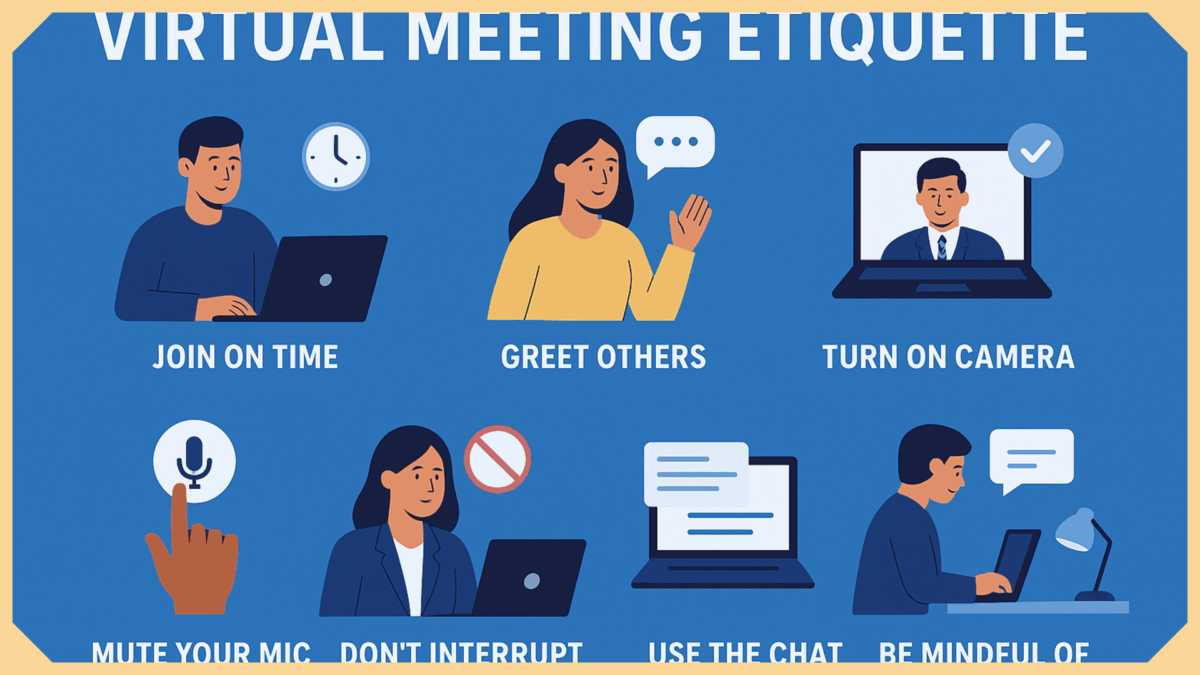

virtual meeting etiquette for attendees have become a standard part of modern work. Whether you are attending a team discussion, client presentation, training session, or company-wide meeting, how you conduct yourself online can significantly influence communication, collaboration, and professional relationships.
While virtual meetings offer convenience and flexibility, they also come with unique challenges. Background noise, technical issues, distractions, and poor communication habits can reduce productivity and create a negative impression. This is why understanding virtual meeting etiquette for attendees is essential for anyone participating in online meetings.
Good virtual meeting etiquette is not simply about following rules. It is about showing respect for other participants, contributing effectively to discussions, and creating a productive environment where everyone can collaborate successfully.
What Is Virtual Meeting Etiquette?
Virtual meeting etiquette refers to the professional behaviors and practices participants should follow during online meetings. These guidelines help ensure meetings run smoothly, communication remains clear, and all attendees feel respected.
Unlike traditional face-to-face meetings, virtual meetings rely heavily on technology. Because of this, attendees must pay attention to factors such as audio quality, video presence, internet connectivity, and online communication habits.
When everyone follows proper etiquette, meetings become more organized, engaging, and efficient.
Why Virtual Meeting Etiquette Matters
Many professionals underestimate the impact their online behavior has on others. Small actions such as arriving late, leaving your microphone unmuted, or multitasking during discussions can affect the overall quality of a meeting.
Following proper virtual meeting etiquette provides several benefits:
- Improves communication among participants
- Reduces interruptions and distractions
- Demonstrates professionalism
- Encourages active participation
- Builds trust among team members
- Creates a positive meeting experience
A virtual meeting is often the digital equivalent of sitting together in a conference room. The same level of professionalism should always be maintained.
Prepare Before the Meeting
Preparation is one of the most important aspects of successful virtual meeting participation.
Joining a meeting without preparation often leads to confusion, delays, and missed opportunities to contribute meaningfully.
Before the meeting begins, review the agenda and understand the objectives. Knowing what topics will be discussed allows you to prepare questions, updates, or relevant information in advance.
You should also verify that your internet connection is stable and that your microphone, speakers, and camera are functioning correctly. Technical problems can occur unexpectedly, but basic preparation reduces the likelihood of disruptions.
Joining the meeting a few minutes early is another professional habit. It gives you time to resolve any technical issues and settle in before discussions begin.
Create a Professional Environment
Your surroundings can affect both your concentration and the experience of other attendees.
Whenever possible, choose a quiet location where background noise is minimal. Family conversations, television sounds, barking dogs, or street noise can distract participants and make communication difficult.
Good lighting is equally important. Attendees should position themselves so their face is clearly visible when using a camera. Sitting in front of a bright window often creates shadows that make visibility poor.
A clean and uncluttered background helps maintain professionalism. Many meeting platforms also provide virtual background features, but these should be simple and non-distracting.
Your environment communicates professionalism before you even say a word.
Dress Appropriately
One common misconception is that virtual meetings require less professional attire than in-person meetings.
While dress expectations may vary depending on company culture, appearing neat and professional demonstrates respect for colleagues and clients.
For internal meetings, business casual clothing is often appropriate. For client meetings, interviews, or presentations, more formal attire may be expected.
Professional appearance contributes to confidence and helps maintain the right mindset during discussions.
Join on Time
Punctuality remains important regardless of whether a meeting takes place in person or online.
Arriving late can interrupt ongoing discussions and force others to repeat information that has already been covered. It may also create the impression that the meeting is not a priority for you.
Make it a habit to join meetings a few minutes before the scheduled start time. If unavoidable circumstances cause a delay, notify the organizer whenever possible.
Consistent punctuality reflects reliability and professionalism.
| Review Agenda | Test Technology | Join Early |
|---|---|---|
| Choose a Quiet Space | Use Proper Lighting | Dress Professionally |
| Mute When Not Speaking | Use Camera Appropriately | Listen Actively |
| Avoid Interruptions | Stay Engaged | Use Chat Professionally |
| Follow Up on Action Items |
Keep Your Microphone Muted
One of the simplest yet most important virtual meeting rules is keeping your microphone muted when you are not speaking.
Background noises that may seem insignificant to you can be surprisingly disruptive to others. Keyboard typing, paper shuffling, conversations, and household sounds can interfere with communication.
Muting your microphone minimizes distractions and allows speakers to be heard clearly.
When it is your turn to contribute, unmute, speak clearly, and mute again after finishing.
This simple habit greatly improves the overall meeting experience.
Use Your Camera Thoughtfully
Video can significantly enhance communication because it allows participants to see facial expressions and body language.
Whenever appropriate, keeping your camera on demonstrates engagement and attentiveness. It helps create stronger connections among participants and fosters a more collaborative atmosphere.
However, there may be situations where camera use is not practical due to bandwidth limitations, personal circumstances, or organizational policies.
If your camera is on, remain attentive and avoid activities that may distract others. Looking away frequently, moving around excessively, or appearing disengaged can send unintended messages.
Practice Active Listening
Effective meeting participation requires more than simply attending.
Active listening means giving your full attention to the speaker, understanding the message being communicated, and responding thoughtfully when appropriate.
Avoid checking emails, browsing websites, or working on unrelated tasks during meetings. Multitasking often results in missed information and reduced engagement.
Instead, focus on the discussion, take notes, and pay attention to key points and action items.
Participants who actively listen contribute more effectively and help meetings achieve their objectives.
Avoid Interrupting Others
Interruptions can disrupt the flow of conversation and make participants feel undervalued.
Virtual meeting platforms often include features such as hand-raising tools, reaction icons, or chat functions that help manage participation respectfully.
Wait for speakers to finish their thoughts before responding. If multiple participants want to speak, allow the meeting facilitator to guide the conversation.
Showing patience and respect encourages more productive discussions.
Respectful communication is one of the strongest indicators of professional meeting behavior.
Speak Clearly and Concisely
Online communication presents challenges that are not always present during face-to-face interactions.
Audio delays, internet issues, and varying sound quality can make conversations difficult to follow. Because of this, attendees should speak clearly, at a moderate pace, and avoid unnecessary jargon.
When contributing to discussions, focus on relevant points and communicate them concisely. Long, unfocused responses can reduce engagement and consume valuable meeting time.
Clear communication benefits everyone involved.
Use Chat Features Professionally
Most virtual meeting platforms include chat functionality that allows participants to share comments, questions, and resources.
While chat can enhance communication, it should be used responsibly.
Keep messages relevant to the meeting topic and avoid side conversations that distract participants. Be mindful that written communication can sometimes be misunderstood, so maintain a professional and respectful tone.
The chat feature should support the meeting—not compete with it.
Stay Engaged Throughout the Meeting
Engagement is essential for productive collaboration.
Attendees should participate when appropriate, ask thoughtful questions, and contribute relevant ideas. Remaining silent throughout a meeting may create the impression that you are disengaged or unprepared.
At the same time, participation should be balanced. Dominating conversations can prevent others from sharing their perspectives.
The most effective attendees contribute meaningfully while encouraging collaboration among all participants.
Common Mistakes to Avoid
Even experienced professionals occasionally make mistakes during virtual meetings.
One of the most common issues is multitasking. Responding to emails, browsing social media, or working on unrelated projects reduces focus and participation quality.
Another mistake is using distracting backgrounds or excessive virtual effects. While these features can be entertaining, they may shift attention away from the meeting’s purpose.
Talking over others, joining late without notice, forgetting to mute microphones, and failing to prepare are additional behaviors that should be avoided.
Recognizing these habits is the first step toward improving meeting effectiveness.
Virtual Meeting Etiquette for Different Situations
Not all virtual meetings are the same.
Client meetings typically require a higher level of formality because attendees represent their organization. Professional appearance, punctuality, and clear communication become especially important.
Team meetings may be more collaborative and informal, but professionalism should still be maintained.
Interviews require careful preparation, a distraction-free environment, and strong engagement.
Webinars and training sessions often involve larger audiences. In these situations, attendees should follow presenter instructions, use chat appropriately, and minimize disruptions.
Understanding the context of each meeting helps participants adjust their behavior accordingly.
Follow Up After the Meeting
Professional etiquette continues even after the meeting ends.
Review any notes you have taken and identify action items that require attention. Completing assigned tasks promptly demonstrates accountability and reliability.
If additional information was requested during the meeting, provide it within a reasonable timeframe.
Following up appropriately ensures that discussions lead to meaningful results rather than remaining unfinished conversations.
Quick Virtual Meeting Etiquette Checklist
Before joining any online meeting, consider the following checklist:
- Review the meeting agenda
- Test your technology
- Join a few minutes early
- Choose a quiet environment
- Dress professionally
- Mute your microphone when not speaking
- Use your camera appropriately
- Stay focused and engaged
- Listen actively
- Communicate clearly and respectfully
- Participate constructively
- Complete follow-up actions
These simple practices can dramatically improve your effectiveness as a meeting participant.
Conclusion
As remote and hybrid work environments continue to evolve, strong online communication skills have become increasingly important. Understanding and applying proper virtual meeting etiquette for attendees helps create productive discussions, strengthens professional relationships, and improves overall meeting outcomes.
From preparing in advance and maintaining a professional environment to practicing active listening and respectful communication, every action contributes to a better virtual meeting experience.
Professionalism does not end when meetings move online. In many cases, it becomes even more important. By following these virtual meeting etiquette best practices, attendees can communicate confidently, collaborate effectively, and leave a positive impression in every online meeting they join.